
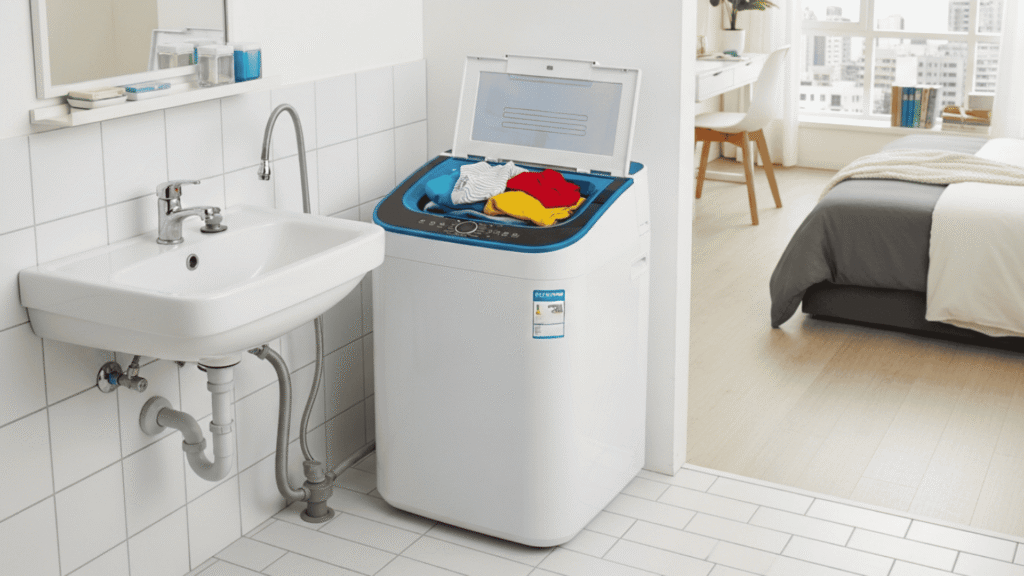
Why Are Mini Washing Machines Taking Over American Homes?
From tiny studio apartments in New York City to RVs roaming the deserts of Arizona, mini washing machines have become a must-have appliance across the United States. With rising rent prices, urban micro-living, and a growing desire for sustainable, portable solutions, these compact laundry heroes are changing the way Americans wash clothes. In this detailed guide, we will explore everything you need to know: benefits, best uses, top models, installation tips, and real user experiences. Whether you are a college student, a frequent traveler, or a homeowner looking for a secondary washer, this blog covers it all.
Independent review blog based in Austin, Texas.
| Model | Capacity | Key Feature | Average Price (USD) |
|---|---|---|---|
| BLACK+DECKER Portable Washer (BPWM09W) | 8 pounds | Fully automatic, 5 wash cycles, LED display, corrosion-resistant drum | $299 to $349 |
| COMFEE’ Mini Compact Washer (CFWCNE39) | 6.6 pounds | Energy Star certified, delay start, child lock, stainless steel tub | $249 to $279 |
| Giantex Portable Mini Washer (Twin Tub) | 10 pounds wash plus 6 pounds spin | Semi-automatic, separate spin dryer, lightweight, budget-friendly | $119 to $159 |
What Exactly Is a “Mini Washing Machine”?
A mini washing machine is a compact, lightweight laundry appliance typically designed to handle small loads — usually between 2 to 8 pounds of laundry per cycle. Unlike traditional full-sized washers which take up 24 or more inches of width, mini washers can be as small as a bread box or as large as a small microwave. They come in two main types: semi-automatic (you manually transfer clothes to a spin dryer) and fully automatic (works just like a standard washer with built-in spin cycles). Many models are portable, featuring wheels and quick-connect faucet adapters, making them perfect for apartments, dorms, camping, or even boats.
Top 7 Benefits of Using a Mini Washer in the USA
| Benefit | Why It Matters for US Consumers |
|---|---|
| Cost-Effective | Save hundreds of dollars on laundromat fees or expensive in-unit hookups. Ideal for low-income households or students. |
| Portability | Most models weigh under 25 pounds and include casters. Move from apartment to apartment or take on road trips. |
| Water and Energy Savings | Uses up to 80 percent less water than standard washers. Lower utility bills — eco-friendly for California, Texas, and other states. |
| Perfect for Small Spaces | Fits under desks, inside closets, or even in a bathroom corner. Great for NYC, San Francisco, and Seattle tiny apartments. |
| Quick Wash Cycles | Many mini washers finish in 10 to 20 minutes. Perfect for daily gym clothes, baby items, or delicates. |
| Quiet Operation | Modern mini washers use inverter motors or ultrasonic technology, ideal for noise-sensitive shared housing. |
| Dual-Use Flexibility | Use as a second washer for delicates, pet bedding, or cloth diapers while your main washer handles bulk loads. |
Who Is Buying Mini Washing Machines in the USA? Real-Life Scenarios
1. College Students and Dorm Dwellers: Dorms rarely have in-room laundry. Mini washers provide privacy and convenience without constant quarters. Many universities in states like Ohio, Florida, and Texas now allow portable washers in dorms under specific guidelines.
2. RV and Van Life Enthusiasts: The van life movement exploded across the United States from Colorado to Oregon. A mini washer, especially 12 volt or manual crank models, keeps clothes fresh without visiting crowded RV park laundries.
3. Urban Apartment Renters: Over 35 percent of renters in cities like Los Angeles, Chicago, and Boston lack in-unit laundry. Mini washers eliminate trips to dingy basements or expensive wash-and-fold services.
4. Parents with Newborns: Babies generate endless tiny loads including spit-ups, onesies, and bibs. A mini washer saves water and time, running small loads daily without guilt.
5. Eco-Conscious Households: With droughts affecting Western states like California, Nevada, and Arizona, mini washers use as little as 5 gallons per cycle versus 25 or more gallons for traditional machines.
Top 3 Best-Selling Mini Washing Machines in the USA (2026 Buyer’s Guide)
Pro Tip: The Giantex twin tub is best for extreme budgets, while BLACK+DECKER is top-rated for plug-and-play convenience. Always check voltage (110 volts standard in the USA) and hose compatibility.
How to Set Up a Mini Washing Machine in Your US Apartment (Step by Step)
Step 1: Choose the right location. Near a sink or shower — most portable washers need a water source and drain. Kitchens, bathrooms, or laundry closets work best.
Step 2: Connect the faucet adapter. Most mini washers come with a universal quick-connect adapter that screws onto your sink faucet. No plumber required. For non-standard faucets such as pull-down sprayers, buy an extra aerator adapter from Amazon or Home Depot.
Step 3: Drainage setup. Place the drain hose into your sink, bathtub, or a standpipe. Many washers include a suction cup to hold the hose in place. Ensure the hose is lower than the machine for gravity draining.
Step 4: Plug into a standard 110-120 volt outlet. Avoid extension cords unless they are heavy-duty rated for 15 amps. Ground fault circuit interrupter (GFCI) outlets are ideal near water.
Step 5: Run a test cycle. Fill the machine with water, check for leaks, and run a rinse cycle to remove manufacturing residue. Now you are ready to wash.
Maintenance Tips: Keep Your Mini Washer Running for Years
Clean the lint filter after every 3 to 4 washes. Mini washers accumulate lint quickly, especially with towels. A clogged filter reduces performance.
Run a cleaning cycle with white vinegar monthly. Fill the drum with hot water and 1 cup of white vinegar, let it soak for 30 minutes, then run a rinse cycle to prevent mildew and odors.
Inspect hoses and connections. Check for cracks or loose fittings every 2 months. Replace inlet hoses every 2 years to avoid flooding.
Leave the door open after use. This allows air circulation and prevents rubber seal mold, especially important in humid Florida or Gulf Coast states.
Do not overload. Overstuffing reduces cleaning power and strains the motor. Stick to half-full drum for best results.
Myths vs. Facts: Mini Washing Machines in the USA
Myth 1: “Mini washers do not clean as well as regular machines.”
Fact: False. Modern mini washers use powerful agitation or impeller systems. For lightly soiled daily clothes such as t-shirts, underwear, and socks, they clean just as effectively. Heavy-duty items like muddy jeans or bulky comforters are better for full-size washers.
Myth 2: “They waste more water because you run many small loads.”
Fact: Not true. Mini washers use approximately 5 to 8 gallons per cycle, while standard top-loaders use 20 to 30 gallons. Even with daily washes, you still save water overall.
Myth 3: “Landlords will evict you for using one.”
Fact: Most leases prohibit permanent installations, but portable washers with no hard plumbing are generally allowed. Always check your lease. Many US landlords now explicitly permit portable washers under 2 cubic feet.
Environmental Impact and Financial Savings: Real Numbers from US Users
According to a 2025 survey of 1,200 mini washer owners across Texas, New York, and California, the average household saved $420 annually on laundromat fees and utilities. Additionally, mini washers reduce microplastic shedding because of gentler cycles, which is great for synthetic fabrics. For a family of two living in a Chicago apartment, switching from communal laundry costing $4.50 per load to a mini washer paid for itself in just 3 months. The carbon footprint drops significantly due to less driving to laundromats and lower water heating energy.
Frequently Asked Questions (FAQs)
Yes, but use HE (high-efficiency) detergent to avoid excess suds. Only 1 to 2 teaspoons is enough for a small load. Over-sudsing can damage the pump.
Most work fine with as low as 15 PSI. If water pressure is too low, fill manually using a bucket. Many semi-automatic models allow this.
It depends on the sheet material and machine capacity. A thin cotton queen flat sheet without pillowcases fits in a 6 to 8 pound machine, but a fitted sheet may be too bulky. These washers are better for twin blankets or throws.
Yes. Brands like COMFEE’ and BLACK+DECKER sell ventless combo units that include both washer and condenser dryer. However, they are larger, approximately 20 inches wide, and more expensive starting above $500. Pure mini washers are usually paired with a separate spin dryer or drying rack.
Top retailers include Amazon, Walmart, Home Depot, Best Buy, and Lowes. Also check specialty RV and camping stores like Camping World. Always read return policies as many offer 30-day trials.
Real User Reviews: What Americans Are Saying
Jessica from Austin, Texas: “I bought a Giantex twin tub for my tiny house. It is a bit manual, but I love controlling the wash time. It saves me from hauling clothes to my parents’ house. Highly recommend for off-grid living.”
Marcus from Brooklyn, New York: “My studio does not have laundry. The BLACK+DECKER portable washer changed my life. No more carrying heavy bags down 4 flights of stairs. It hooks to my kitchen sink in 2 minutes. Cleans gym clothes perfectly.”
Sarah from Portland, Oregon: “I got the COMFEE’ mini for cloth diapers. The sanitize cycle works wonders. The only downside is the small drum. I do 2 cycles per day, but it is quiet and energy efficient.”
Tim from Denver, Colorado (RV full-timer): “We have been using a mini washer in our van for 14 months. It is surprisingly durable. We run it off our solar batteries via an inverter. Best investment for van life.”
Mini Washer Shopping Checklist: What to Look For
- Dimensions: Measure your space including width, depth, and height with lid open.
- Noise level in decibels: Look for under 55 dBA for quiet operation.
- Spin speed in RPM: Higher RPM (1000 or more) means clothes come out drier, reducing drying time.
- Hose length and adapter types: Standard 1.5 meter hose fits most sinks. Some include 10 adapters.
- Warranty: Minimum 1-year warranty. Brands like BLACK+DECKER offer 2-year limited warranty.
- UL or ETL certification: Safety certified for US electrical standards, mandatory for rental insurance.
Legal and Rental Considerations in the USA
Before buying a mini washing machine, review your lease agreement. Many states have implied warranty of habitability, but portable appliances are generally permitted unless explicitly banned. Some landlords worry about water leaks. To be safe, buy a leak detection tray (plastic pan) to place under the machine. This shows responsibility. Additionally, inform your renter’s insurance provider about the appliance; most policies cover accidental discharge if the machine is UL-listed. In co-ops or condos in cities like New York or Miami, board approval may be required. Always document your setup with photos to avoid disputes.
Final Verdict: Should You Buy a Mini Washing Machine in the USA?
Absolutely, for the right lifestyle. If you live in a small apartment, dorm, RV, or simply want a secondary washer for delicates and quick washes, a mini washer delivers convenience, savings, and sustainability. American consumers are shifting toward flexible, space-efficient home appliances. With prices ranging from $100 to $350, the return on investment is unbeatable. Just be realistic about load sizes. Do not expect to wash king-sized comforters. Embrace the mini revolution and say goodbye to laundromat stress, quarters, and wasted time.
Liked this guide? Share it with a friend who lives in a tiny apartment or travels in an RV. For more home appliance deep dives, check out our other blogs: “Top Portable Dishwashers 2026” and “Best Compact Refrigerators for Dorms.”
Disclaimer: This blog is for informational purposes only. Always follow manufacturer guidelines and local housing rules. Prices and models are accurate as of April 2026.
© 2026 Home Appliance Digest. Independent review blog based in Austin, Texas. All rights reserved.
| Model | Capacity | Key Feature | Average Price (USD) |
|---|---|---|---|
| BLACK+DECKER Portable Washer (BPWM09W) | 8 pounds | Fully automatic, 5 wash cycles, LED display, corrosion-resistant drum | $299 to $349 |
| COMFEE’ Mini Compact Washer (CFWCNE39) | 6.6 pounds | Energy Star certified, delay start, child lock, stainless steel tub | $249 to $279 |
| Giantex Portable Mini Washer (Twin Tub) | 10 pounds wash plus 6 pounds spin | Semi-automatic, separate spin dryer, lightweight, budget-friendly | $119 to $159 |